A supplier quality problem can be documented correctly and still remain unresolved. The part is out of specification, the non-conformance has been recorded, and the supplier has been notified. None of those steps tells you who owns the follow-up, what the supplier changed, or how your team will decide the issue is ready to close.
Receiving a supplier response does not close a corrective action. Closure comes after the manufacturer has reviewed the response, confirmed that the action was implemented, and checked that the action addressed the cause of the problem.
What a Supplier Corrective Action Process Involves
A Supplier Corrective Action Request, or SCAR, is a structured request asking a supplier to investigate a quality problem, identify its cause, implement corrective action, and provide evidence that supports review and closure. ASQ's supplier corrective action guidance places containment, root cause, implementation, effectiveness review, and closure within that response process.
Non-conformance reports and SCARs are related, but they do different jobs. The non-conformance report, or NCR, records what failed to meet a requirement. A SCAR moves the issue into supplier investigation and corrective action. JPL supplier requirements illustrate this distinction by separating supplier non-conformance reporting from the possibility of a later SCAR. Some organizations may combine these records administratively, but the functions remain different.
ISO 9000 also separates correction from corrective action. Correction addresses the detected problem and can include rework or regrade. Corrective action addresses the cause so the same problem is less likely to recur from that cause. Containing one shipment does not establish that the supplier has removed the cause.
Capture the following information and decisions as the corrective action moves through the response process, in line with your organization's quality procedures.
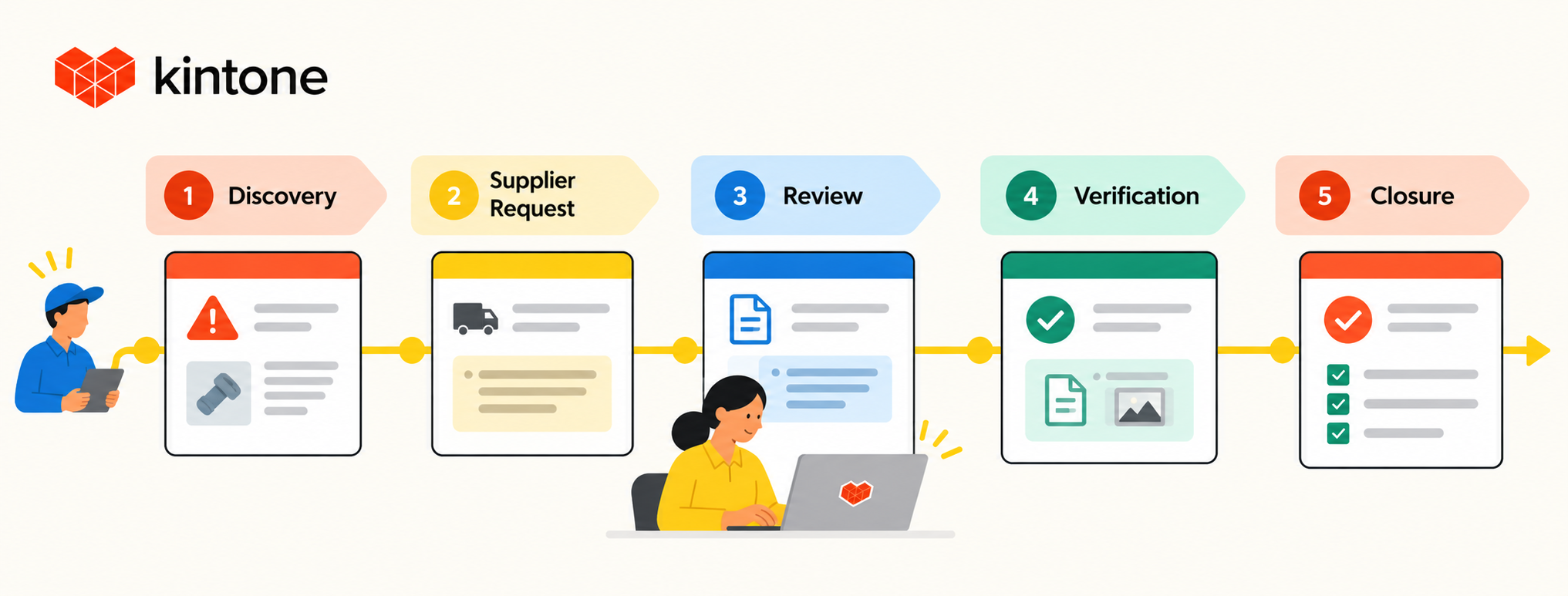
At the moment of discovery, record when the issue was found, who found it, the supplier, the affected part or material, the requirement that was not met, the quantity affected, the disposition decision, and any immediate containment action.
When requesting supplier corrective action, name the internal follow-up owner and set a supplier response deadline. Request the root-cause analysis, proposed action and target completion date alongside the original non-conformance.
During review, compare the supplier's explanation with the original incident and assess the proposed action against the identified cause. After implementation, retain evidence of the change and the date it was completed.
Before closure, review evidence that the corrective action was implemented and was effective. Depending on the issue, that evidence may come from records, inspection results, later shipments, an audit, or another check suited to the non-conformance.
Once the evidence has been reviewed, record who approved closure, when the review took place, and the basis for the decision. Until that review is complete, the corrective action remains open.
ISO and IAF guidance on reviewing non-conformities calls for objective evidence of implementation and effectiveness before closing audit non-conformities. For supplier corrective action, choose a check suited to the defect and the change made, rather than treating a completed response form as proof.
Where the Process Breaks Down
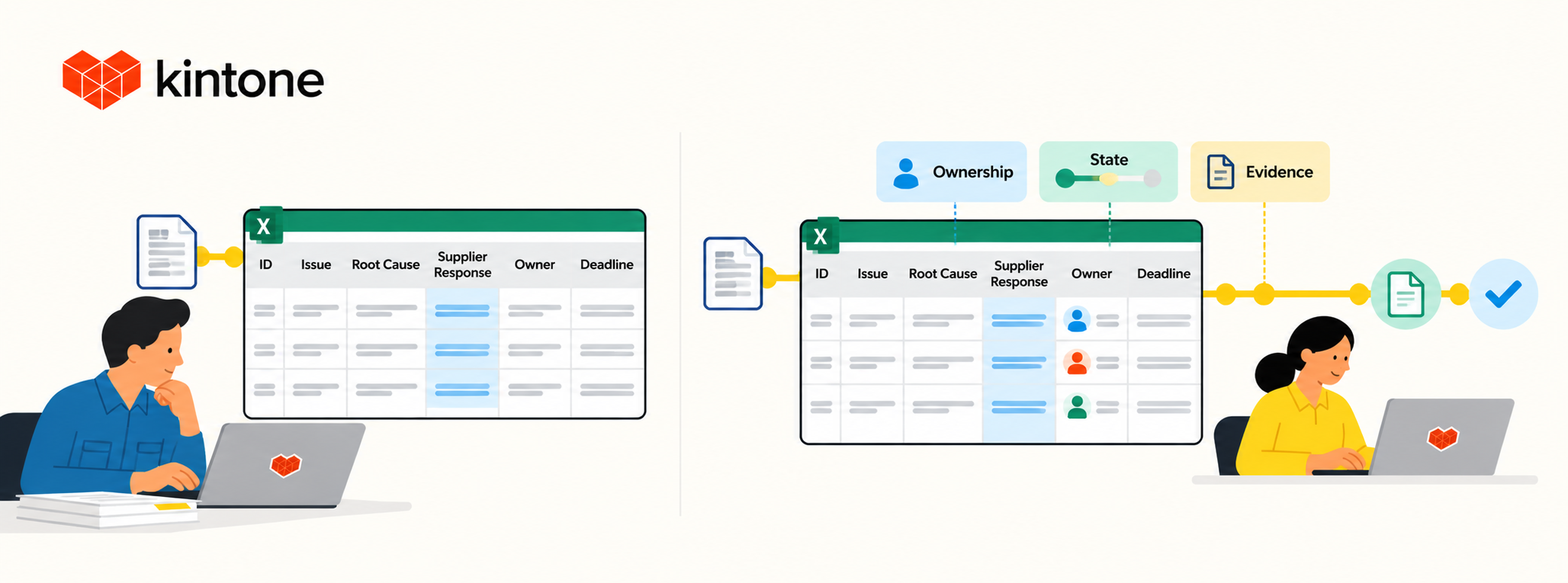
A spreadsheet can record a corrective action, including its owner, deadline, root cause, proposed change and closure date. The difficulty comes when an update must lead to someone else's next task. Changing a cell does not, on its own, assign a reviewer, request evidence or prompt follow-up on an overdue response. Those steps need explicit assignments and controls beyond the recorded values.
When the supplier replies, responsibility has to pass to the person reviewing that response. If the reply stays in an inbox while the tracking sheet shows only that it arrived, the update records receipt without assigning the review. Even with a reviewer named, a response detached from the original non-conformance leaves that person searching for the requirement and inspection evidence before judging the supplier's explanation.
Implementation creates another decision point. The supplier may report that a change is complete, but that update must lead to a check of the implementation evidence and the action's effectiveness. Closing the record at that point would skip the manufacturer's assessment. An open record also tells the team too little if it does not distinguish work awaiting supplier action from work awaiting internal review.
A repeat incident should bring the supplier's earlier corrective action back into the review. If that history remains in a separate file, staff may investigate the new defect without comparing it with the previous cause, action and closure evidence. Keep prior actions accessible alongside supplier compliance tracking and supplier certification status so later decisions can draw on the supplier's recorded history.
What the Process Asks of a Tracking System
A useful tracking system must preserve ownership, state and evidence as one connected record of the work. Ownership identifies who acts next, state distinguishes the current stage, and evidence explains why the action can advance. The test is how those three stay connected as responsibility changes, rather than how many details the system can store.
The value of that continuity becomes easiest to see when someone needs to reconstruct what happened. Legend Valve moved supplier compliance information from spreadsheets into Kintone for CTPAT, a supply chain security program, not a quality management certification. Heather Forton, Supply-Chain Project Manager, described the audit-preparation change. "We went from taking months to prepare for an audit to being able to do it within the same day."
Legend Valve demonstrates the value of keeping supplier records retrievable when scrutiny arrives. Supplier corrective action creates a different need for the same basic capability: retrieving the relevant supplier history when it is under review.
Don't Lose the Supplier Request Inside CAPA
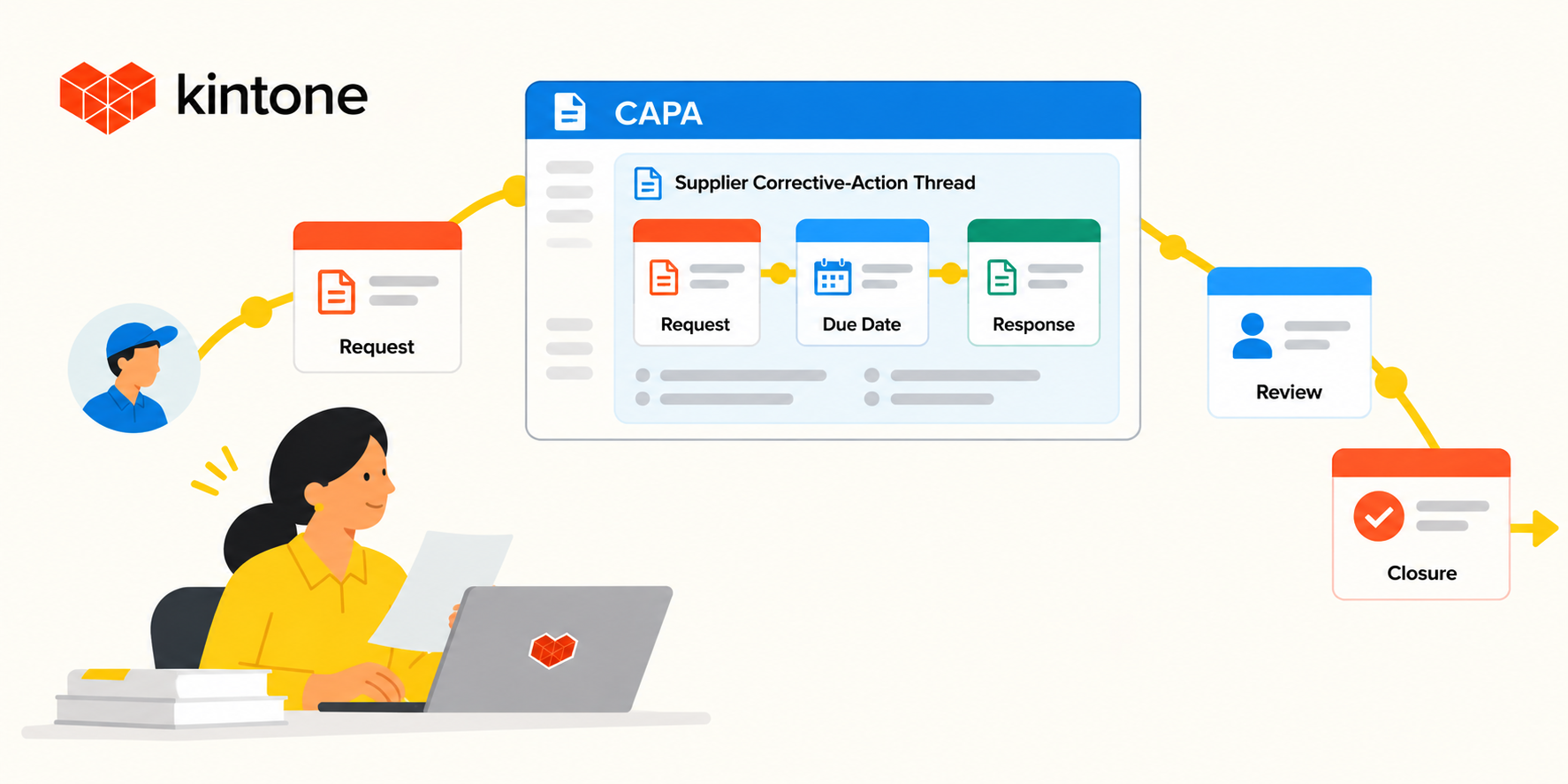
Do not turn a supplier corrective action into a generic CAPA record that leaves the supplier's obligations unclear. CAPA means corrective and preventive action, and ASQ's guidance includes supplier responsibilities within that process. A SCAR asks the supplier to investigate a particular non-conformance and respond. If your quality system records the issue under CAPA, retain that request, its response deadline and the manufacturer's review.
Keep the type of action explicit. Under ISO 9000, corrective action targets the cause of a non-conformance that has occurred to prevent recurrence; preventive action targets a cause before the non-conformance occurs. ISO 9001's 2015 edition treats prevention through risk-based thinking, so a separate preventive-action step should not be added to every SCAR by default. The record should follow your quality procedure and preserve the supplier's obligations through review and closure.
Keep the Corrective-Action Chain Traceable in Kintone
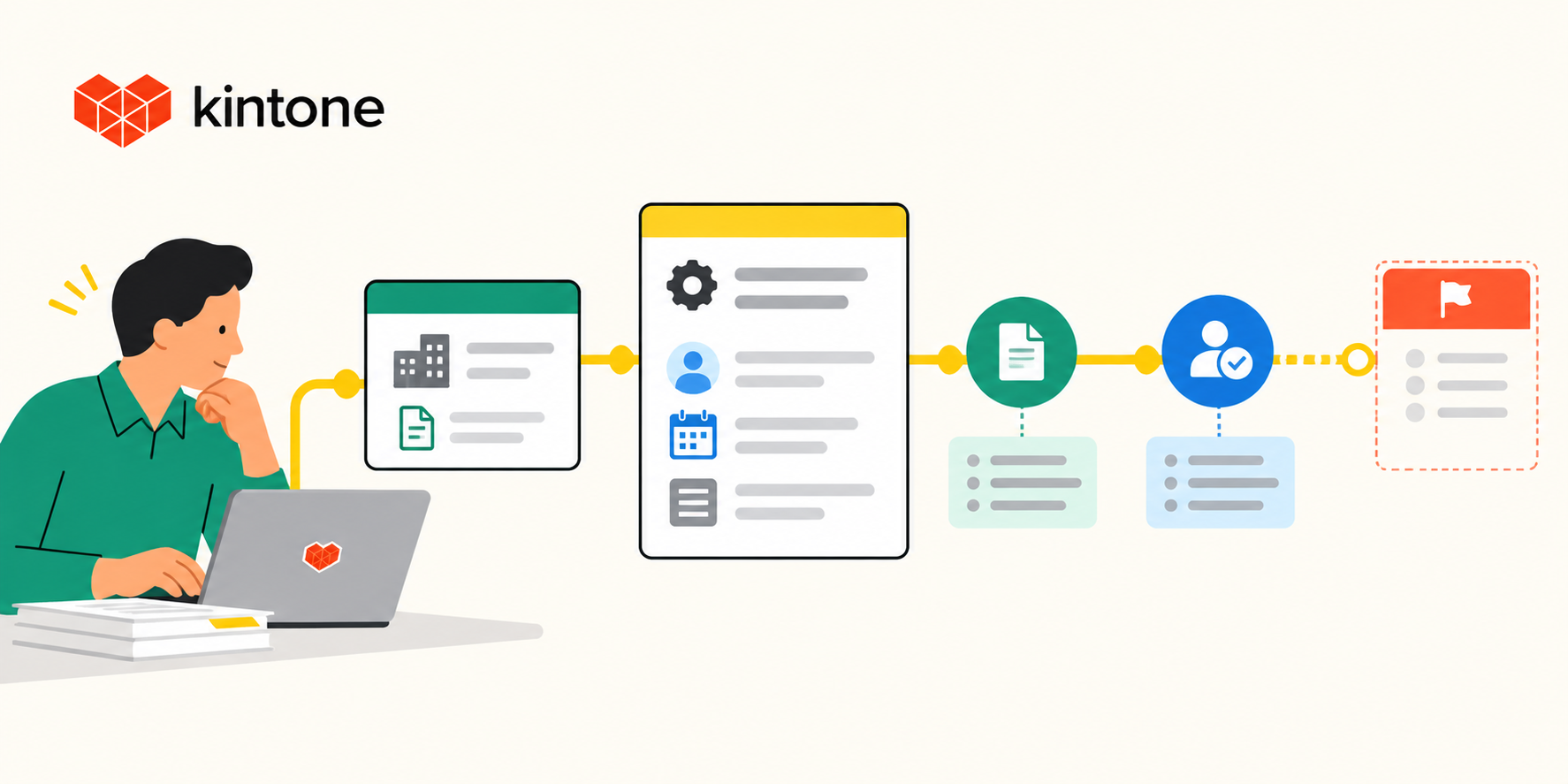
In Kintone, the incident, supplier response, evidence and approval can form one traceable chain from discovery through review and closure. The following configuration example uses documented form settings and process management; the manufacturer still defines its own quality procedure.
The chain begins with the non-conformance and stays with the corrective-action record as the response arrives. Alongside the internal owner and relevant dates, Attachment fields can retain the supplier's response, inspection results and implementation evidence for the reviewer to examine.
As the work changes hands, configured process stages can distinguish supplier response, response review, effectiveness verification and closure. Assigning the review stage to the responsible employee makes that next task visible on the record, while keeping receipt of a response separate from approval.
Before closure, a configured condition can keep the approval step unavailable until the reviewer records a decision. That checks for a recorded decision; the reviewer still has to judge the evidence. Kintone's status history shows when and by whom a record was approved.
After closure, a Related records field on the supplier record can display corrective actions with a matching supplier ID. Staff with the required access can open an earlier action and review its evidence when a new incident occurs. These are configured records and review steps; the example does not assume a dedicated SCAR application or direct supplier access.
Close the Action With Evidence the Next Reviewer Can Use
If your team cannot open the record and explain what went wrong, what caused it, what changed, who checked the change, and why the action was closed, the process ended too early.
Bring an existing non-conformance report to Kintone and trace how its response, evidence and approvals could stay with the record through closure.


About the Author
Agbaje Feyisayo is a dynamic content marketing expert with over 10 years of experience writing high-converting content across SaaS, technology, AI, and digital transformation. With a strong background in product marketing and storytelling, Agbaje helps top-tier companies turn complex ideas into actionable content that attracts and converts leads.