

The year 2025 brought a noticeable shift in how organizations think about their daily work. AI tools became part of routine operations, compliance expectations grew across every industry, and teams began reassessing the systems they rely on to manage information. These changes did not happen quietly. They reshaped how leaders approach technology decisions and highlighted the need for secure, flexible, and reliable digital workflows.
Let's look at the state of digital workflows in 2025 and the forces that reshaped how teams approached their work.
The State of Digital Workflows in 2025
Organizations entered 2025 with growing pressure to do more with less. Many teams began to recognize that the systems they relied on in previous years were now slowing progress.
Research from McKinsey shows that about 50 percent of all work activities can be automated, and Formstack's State of Digital Maturity report notes that automation can save organizations between $10,000 and $1M per year. This created a push for leaders to review manual processes and consider workflow modernization.
AI adoption played a significant role in this shift. A 2025 McKinsey survey found that 78 percent of organizations were using AI in at least one business function. Gallup also reported that more white collar workers were using AI frequently in 2025, with usage rising to 27 percent. As AI became an everyday capability, teams began to expect their workflow systems to support these tools directly rather than sit apart from them.
This focus on reliability made the limits of spreadsheets more visible. Research led by Prof. Pak Lok Poon found that 94 percent of spreadsheets contain errors, and over $3 billion has been lost annually due to mismanagement of spreadsheet data. These challenges encouraged more organizations to transition from individual spreadsheets to secure database platforms that offer structured data and better protection against human error.
Compliance was another major force moving organizations toward modern systems. PwC's Global Compliance Study reported that more than 80 percent of companies planned to increase investment in compliance technology.
Verizon's data breach report found that human involvement accounts for more than 80 percent of breaches, reinforcing the need for workflow automation, thereby reducing the risk of human-made errors. Recent cases also shaped executive decisions. One recent example was a 2.5 million dollar fine issued to Virtu after the company allowed broad employee access to confidential customer and trade data. Events like this raised awareness that outdated or informal workflows expose organizations to unnecessary risk and that secure, auditable systems are now essential.
Major Trends Shaping the Market in 2025
As organizations modernized their systems and responded to rising expectations, several trends stood out. These trends shaped how teams approached technology, managed data, and prepared for the future.
Artificial Intelligence
AI was no longer limited to experiments or isolated use cases. More employees relied on AI tools every day, and organizations began building processes that assumed AI would be present at each stage of a workflow. This shift created new expectations for systems that could support automation, assist with decision-making, and improve accuracy in routine tasks.
Compliance and Data Governance
Compliance activity grew across industries, driven by rising regulatory requirements and increased scrutiny of how data is stored, accessed, and shared. Rising expectations for data protection encouraged organizations to rethink how their teams communicate and share information. For example, regulators in healthcare continued to emphasize strict controls around protected health information, reinforcing the need for clear audit trails and access management. Secure platforms with built-in governance, permissions, and audit capabilities are now in high demand for industries that handle sensitive or confidential data.
No-Code/Low-Code Tools
Smaller teams continued to face heavy workloads without the budget or staffing capacity to build custom systems. Employees outside of traditional IT roles began building apps, shaping workflows, and helping departments manage their own data.
Citizen development programs supported this shift, allowing teams to innovate quickly while working within clear governance frameworks.
Together, these trends shaped the environment in which organizations operated throughout 2025 and created the conditions that made Kintone's progress this year especially meaningful.
Kintone's 2025 Milestones
As digital workflows matured across industries in 2025, Kintone continued to strengthen its platform, contribute to the low-code and AI development, and support organizations seeking secure and flexible systems. Here are some of the highlights that made our 2025:
1. Kintone AI Lab Launch
Kintone introduced the Kintone AI Lab, a free beta service that helps make AI more accessible for everyday users. The AI Lab allows teams to build applications and design workflows through simple chat-based prompts rather than traditional coding.
2. HIPAA Compliance Achievement
Kintone achieved HIPAA compliance in 2025, strengthening its ability to support teams handling sensitive health and business data. This milestone allows healthcare organizations, educational institutions, and regulated industries to process and store protected health information on Kintone after signing a Business Associate Agreement.
3. 2025 FrontRunner and Category Leader Recognition
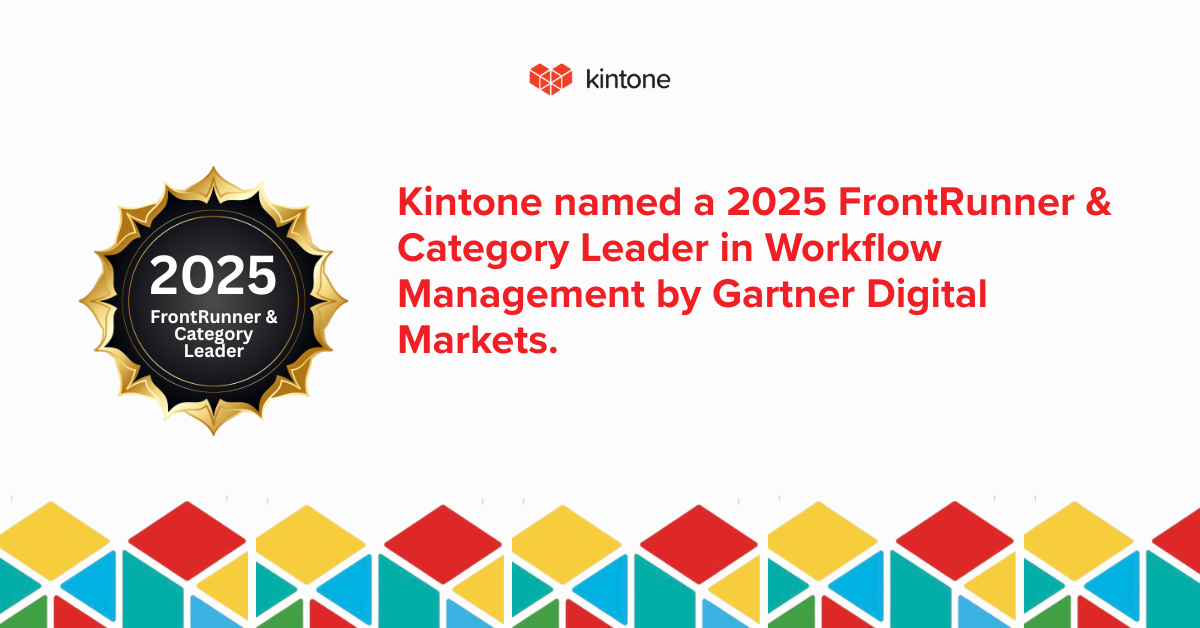
Gartner Digital Markets recognized Kintone as a 2025 FrontRunner and Category Leader in Workflow Management across Software Advice and GetApp. These recognitions reflect customer trust, positive review ratings, and consistent feedback about Kintone's ability to simplify workflows and help teams stay organized. With an average rating of 4.7 out of 5 across more than 150 verified reviews, Kintone continues to be valued for its flexibility, ease of use, and dependable customer support.
4. SOC 2 Type II Compliance Maintained
Kintone maintained its SOC 2 Type II compliance following an independent audit that verified the effectiveness of its controls for security, availability, processing integrity, confidentiality, and privacy. This ongoing compliance demonstrates Kintone's commitment to providing a secure environment where teams can manage sensitive data.
5. Gartner Market Guide Recognition for Citizen Application Development Platforms
Kintone was listed as a representative vendor in the Gartner Market Guide for Citizen Application Development Platforms. This acknowledgment highlights Kintone's role in helping non-technical users contribute to digital transformation efforts through intuitive interfaces and simplified development tools. Gartner projects that citizen developers will play a growing role in the coming years, and Kintone's long-term focus on accessible low-code solutions aligns strongly with that industry direction.
What Organizations Are Preparing For in 2026
Leaders across industries expect technology to play a greater role in coordination, security, and decision-making, and they are preparing their organizations for the next phase of transformation. Several priorities are already emerging as they look ahead to 2026.
Key Areas of Focus for 2026
- AI expanding from task support to full workflow modernization
- Higher demand for secure platforms that protect sensitive information
- Consolidation of tools in favor of fewer, more centralized platforms
- Growing need for automation to offset staffing limitations, especially in SMBs
- Larger roles for citizen developers as low-code capabilities increase
- Stronger expectations for data auditability and clear system records
- Greater emphasis on governance frameworks that guide everyday work
These rising expectations are already influencing how teams plan their workflows and what they look for in the platforms that will support them through 2026.
How Kintone Is Positioned for 2026
As organizations prepare for a more secure, AI-aware, and accountability-driven digital environment, Kintone will enter 2026 with capabilities that align well with these emerging needs.
Secure Foundation for Regulated Industries
Kintone provides a secure foundation for teams handling sensitive data and operating under strict regulatory expectations. This allows healthcare providers, behavioral health programs, educational institutions, and government agencies to manage critical data. Meeting multiple compliance and security standards allows organizations to manage critical information while adapting workflows to their specific regulatory needs.
Strong Governance Framework
Kintone's controls, permissions, and audit features support organizations that need dependable oversight across teams and departments. Maintaining SOC 2 Type II compliance reinforces the platform's reliability as security and governance become more central to daily operations.
No-Code/Low-Code Flexibility
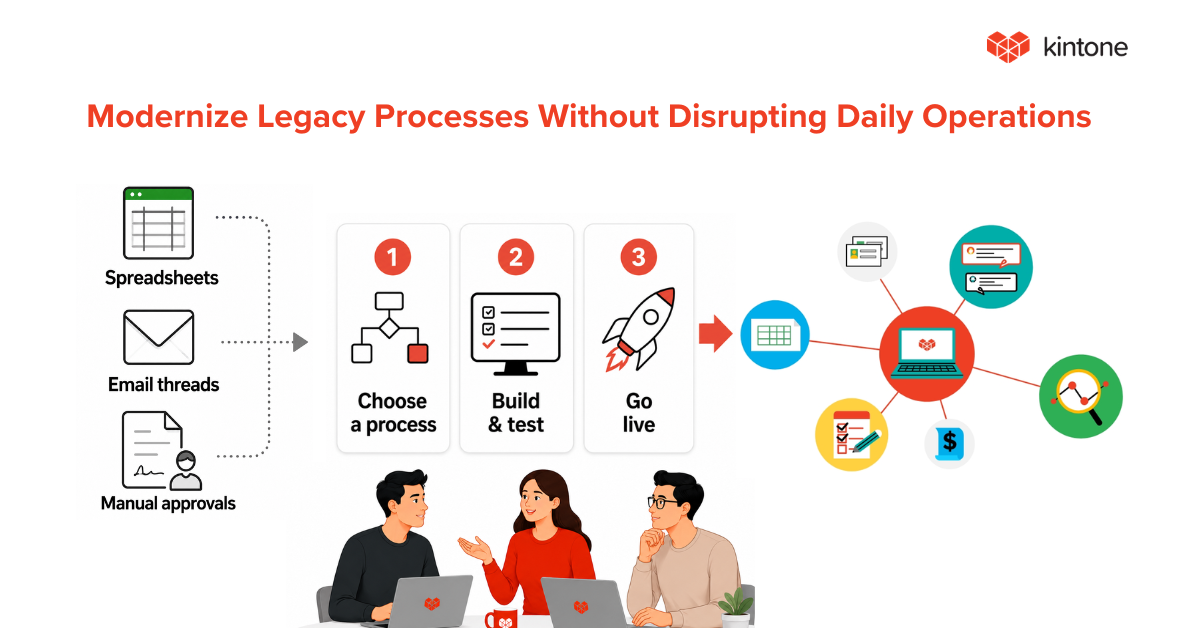
Kintone enables teams to move beyond spreadsheets and isolated apps by creating structured workflows and databases that reflect real processes. This flexibility helps departments solve their own challenges while staying within approved governance boundaries.
Continuous Enhancements of AI Capabilities
With the Kintone AI Lab, the platform continues to explore practical ways to bring AI into everyday work. This positions Kintone to support organizations that expect AI to play a larger role in workflow design, decision support, and operational efficiency.
The Future of Workflows Starts Here
The changes that shaped 2025 made it clear that organizations need systems that are secure and adaptable to growing expectations around AI and compliance. As teams step into 2026, the focus shifts from experimenting with new tools to building scalable and reliable workflows.
If you want to explore how teams are using Kintone to modernize workflows and create stronger systems, you can learn more here.


About the Author
Agbaje Feyisayo is a dynamic content marketing expert with over 10 years of experience writing high-converting content across SaaS, technology, AI, and digital transformation. With a strong background in product marketing and storytelling, Agbaje helps top-tier companies turn complex ideas into actionable content that attracts and converts leads.